Compliance, security, and AI insights.
Expert guidance on compliance frameworks, security operations, AI-powered tooling, and building compliant MSP businesses. Read articles from Fig Group and industry leaders.
Showing 36 of 189 articles
Articles

Technical Guides
Cyber Essentials Tender Deadline Emergency: The 48-Hour Playbook
You have 48 hours until the tender closes and you have just discovered it requires Cyber Essentials. This is the hour-by-hour playbook I give to every organisation in this situation. It works more often than you might expect.
Read article
Industry
Cyber Essentials for Recruitment Agencies: A Practical Guide
Recruitment agencies handle large volumes of personal data - CVs, right-to-work documents, payroll data - and are increasingly required to hold Cyber Essentials by PSLs, MSP agreements, and public-sector frameworks. This guide covers how the controls apply to typical agency infrastructure.
Read article
Company
No, Fig Group Does Not Stand for Financial Institutions Group
Fig Group is the UK cybersecurity and compliance business behind an MSP platform and licensed certification services. Its name does not mean Financial Institutions Group.
Read article
Industry
Cyber Essentials for Charities: A Practical Guide for UK Nonprofit Organisations
Some grant funders and institutional donors require Cyber Essentials; the Charity Commission does not impose a universal certificate requirement. This guide covers what the certification means for a UK charity, how the controls map to typical nonprofit infrastructure, and how to certify on a limited budget.
Read article
Technical Guides
Cyber Essentials Scoping: What Is In, What Is Out, and How to Not Get It Wrong
Scoping is the single most misunderstood part of the Cyber Essentials submission. Get it wrong and your whole assessment is compromised. This guide covers remote workers, BYOD, cloud services, legacy systems, sub-set scoping, and the five scoping traps that most often fail assessments.
Read article
Technical Guides
The 14-Day Patching Rule: What It Actually Says and How to Stay Compliant
The 14-day patching requirement is the single most common reason Cyber Essentials submissions fail first time. Here is what the rule actually says, when the clock starts, and how to evidence compliance when users are on holiday, vendors are slow, and legacy systems will not update.
Read article
Technical Guides
Why Same-Day Cyber Essentials Is Possible: Workflow and Readiness
How preparation, structured workflows and human assessment support same-day Cyber Essentials, with the current guarantee conditions and evolving technical requirements.
Read article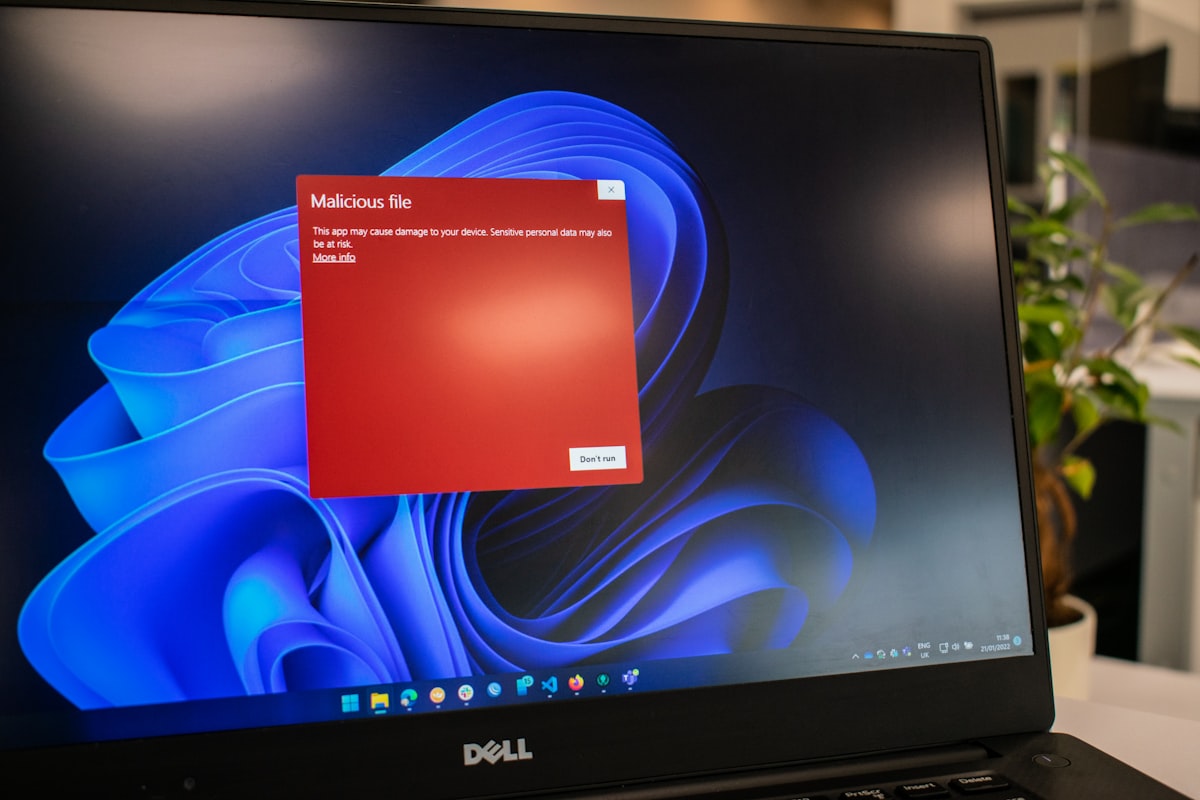
Technical Guides
Malware Protection for Cyber Essentials: What Qualifies and What Does Not
Malware protection looks simple - "we have antivirus" - but the question set asks specifically about configuration, coverage, and fallback approaches. This guide covers what qualifies under v3.3, including the application allow-listing alternative and the most common mistakes during assessment.
Read article
Guides
Cyber Essentials Telford: a practical certification guide
Telford manufacturers should prepare for Cyber Essentials by bringing office IT and production-support responsibilities into the same scope discussion. A short questionnaire is only straightforward when the organisation knows which systems are used, who manages them and what the customer has requested.
Read article
Technical Guides
Secure Configuration for Cyber Essentials: The Controls Assessors Expect to See
Secure configuration is the control area with the broadest scope and the most room for getting details wrong. This guide covers default passwords, auto-run, unnecessary software, cloud service configuration, and the specific settings assessors check against v3.3 (effective 27 April 2026).
Read article
Technical Guides
Cyber Essentials Firewall Requirements: What Assessors Actually Check
The firewall question looks simple but fails more submissions than people expect. This guide covers boundary firewalls, software firewalls, what v3.3 (Danzell) actually says about home routers for remote workers, default credentials, and the cloud firewall configuration assessors expect in 2026.
Read article
Guides
Cyber Essentials Warrington: a practical certification guide
Warrington suppliers should approach Cyber Essentials as a defined assessment of their own technical controls, not as blanket approval for an energy or engineering supply chain. The starting point is the organisation delivering the service and the evidence its customer has actually requested.
Read article
Guides
Cyber Essentials Hull: a practical certification guide
Hull suppliers preparing for Cyber Essentials should begin with the service they operate and the systems their people use. Working in a port-related or renewable-energy supply chain does not automatically mean the certificate covers operational infrastructure or satisfies every customer security condition.
Read article
Guides
Cyber Essentials Bradford: a practical certification guide
Bradford businesses with several sites or different working teams should agree the Cyber Essentials scope before collecting answers. A certificate based on a head-office assumption can be difficult to use accurately if the organisation’s warehouse, workshop or remote staff operate through different systems.
Read article
Guides
Cyber Essentials Derby: a practical certification guide
For Derby engineering businesses, a useful Cyber Essentials assessment starts with a precise description of how the organisation works. Design, workshop, field-service and office teams can use different systems. The certificate should describe the agreed scope accurately rather than suggest that every activity in an industrial group has been assessed.
Read article
Guides
Cyber Essentials Woking: a practical certification guide
Woking engineering and technical-service businesses should select Cyber Essentials from the customer’s written requirement and the organisation’s actual operating model. Supplying an automotive or technology company does not, by itself, determine whether CE, Plus or another assurance route is required.
Read article
Guides
Cyber Essentials Guildford: a practical certification guide
Guildford technology and professional-service businesses should make the distinction between organisational certification and product assurance clear from the outset. Cyber Essentials can demonstrate a technical baseline within scope, but it is not an independent security test of every application, game or specialist system the company develops.
Read article
Guides
Cyber Essentials Norwich: a practical certification guide
Norwich research and service businesses should identify their own certification boundary before borrowing descriptions from a host institution or project partner. Cyber Essentials assesses the organisation and systems within the agreed scope, not an entire collaborative ecosystem simply because its members share a location.
Read article
Guides
Cyber Essentials Exeter: a practical certification guide
Cyber Essentials can help an Exeter organisation demonstrate a defined baseline of technical security. Before starting, establish whether you are responding to a contractual requirement or choosing certification as part of your own improvement programme. That decision affects the deadline and evidence a buyer expects, but not the national control standard.
Read article
Guides
Cyber Essentials Plymouth: a practical certification guide
For a Plymouth marine-technology supplier, Cyber Essentials should be described as an assessment of defined organisational controls. It is not a certificate of vessel safety, autonomous-system performance or the security of every piece of equipment a business develops or supports.
Read article
Guides
Cyber Essentials Cheltenham: a practical certification guide
A Cheltenham company should use Cyber Essentials to make a precise statement about its own technical controls, not to imply affiliation with the intelligence or defence community. Location and industry reputation are not substitutes for a defined scope, implemented controls and an authorised assessment submission.
Read article
Guides
Cyber Essentials Belfast: a practical certification guide
Belfast technology suppliers can use Cyber Essentials to demonstrate a national technical baseline while keeping product security and customer-specific assurance separate. Expertise in cybersecurity does not remove the need to verify how the company’s own accounts, devices and business services are managed.
Read article
Guides
Cyber Essentials Swansea: a practical certification guide
Swansea organisations should begin Cyber Essentials with a clear account of the business systems they operate and the evidence a buyer has requested. A supplier working with a school, health organisation or council should not assume those relationships all carry the same certification conditions.
Read article
Guides
Cyber Essentials Cardiff: a practical certification guide
A Cardiff company may encounter Cyber Essentials in a tender, a partner review or its own security improvement programme. Start by establishing which of those situations applies. A customer deadline and a voluntary improvement goal need different planning, even though the national technical controls remain the same.
Read article
Guides
Cyber Essentials Dundee: a practical certification guide
A Dundee studio or digital supplier preparing for Cyber Essentials should distinguish its organisational IT controls from assurance about the content or software it produces. The certificate can support a customer conversation, but it does not certify that a game, application or production pipeline is free from every security issue.
Read article
Guides
Cyber Essentials Aberdeen: a practical certification guide
Aberdeen energy-service suppliers should be precise about what a Cyber Essentials certificate demonstrates. It can provide a technical baseline for the assessed organisation, but it is not a complete assurance statement about offshore operations, industrial systems or every customer environment supported by its staff.
Read article
Guides
Cyber Essentials Glasgow: a practical certification guide
For a Glasgow organisation delivering projects through employees and external specialists, Cyber Essentials preparation should focus on the systems and access arrangements used to do the work. A certificate is more useful when the business can explain its scope than when it is treated as a general claim about every project partner.
Read article
Guides
Cyber Essentials Edinburgh: a practical certification guide
An Edinburgh organisation can complete Cyber Essentials through a UK certification body without needing a separate Scottish version of the technical standard. The important distinction is between the national scheme and the particular assurance conditions in a customer’s contract.
Read article
Guides
Cyber Essentials Leicester: a practical certification guide
Leicester suppliers should treat Cyber Essentials as a defined technical assessment rather than a general approval of their supply chain. A business can use the certificate in customer assurance while still needing separate evidence about product quality, employment practices, continuity and contractual security obligations.
Read article
Guides
Cyber Essentials Coventry: a practical certification guide
Coventry engineering suppliers should prepare for Cyber Essentials around the systems used to design, support and administer their services. A manufacturing customer’s name or an automotive project does not determine the certification level. The relevant contract and the organisation’s actual scope should do that.
Read article
Guides
Cyber Essentials Portsmouth: a practical certification guide
Portsmouth suppliers should choose a certification route from the actual customer requirement, not from the assumption that all maritime or defence-related work needs the same certificate. Cyber Essentials, Plus and Defence Cyber Certification have distinct roles and should be described accurately.
Read article
Guides
Cyber Essentials Southampton: a practical certification guide
Southampton businesses working in maritime and logistics services should define what their Cyber Essentials certificate covers before using it in customer assurance. A supplier’s office and business systems are not the same thing as a vessel, port or customer-operated network.
Read article
Guides
Cyber Essentials Milton Keynes: a practical certification guide
A technology pilot and a supported business service can have very different operating arrangements. For a Milton Keynes organisation preparing for Cyber Essentials, the first task is to establish what is in use today, who manages it and which organisation the certificate will represent.
Read article
Guides
Cyber Essentials Reading: a practical certification guide
Reading technology and business-service suppliers should distinguish certification of their own organisation from assurance about the products they resell or the customer environments they support. Cyber Essentials can provide a recognised baseline, but its scope must be clear in a proposal or supplier response.
Read article
Guides
Cyber Essentials Brighton: a practical certification guide
A Brighton agency or digital business does not need a traditional fixed office to approach Cyber Essentials, but it does need a clear account of the systems used for work. Shared workspace, home working and external collaborators should be considered through the current scope requirements rather than treated as reasons to leave parts of the business unexplained.
Read article
Guides
Cyber Essentials Oxford: a practical certification guide
For an Oxford organisation, the value of Cyber Essentials depends on a clear scope and truthful answers about how its systems are managed. Research partnerships and specialist facilities can make that boundary less obvious than a single office address suggests.
Read article9 more articles available
Get Compliance Insights Delivered
Receive new articles on compliance frameworks, security operations, and MSP growth delivered to your inbox.
We respect your privacy. Unsubscribe at any time. No spam, just timely, relevant insights.