Skip to contentAbout Fig Group

Policy Management

Automate policy lifecycle from drafting through approval, distribution, and attestation.

The challenge

Does this sound familiar?

Policies age without review. Staff never see them. Attestation is manual and incomplete. Policy drift goes undetected. Compliance officers spend weeks on administrative work instead of governance.

How Fig helps

Policy Management with Fig

Policy Lifecycle

60+ pre-built templates covering access control, network security, encryption, supplier management, HR, incident response, and more. Automated workflows from drafting through review, approval, publication, and archival. Version control and change tracking built-in. Approval chains for team leads and managers are mandatory.

AI-Assisted Drafting

AI tools can generate policy text, procedures, and control workflows. Fig manages versioning, review cycles, and compliance alignment so human teams focus on governance, not formatting.

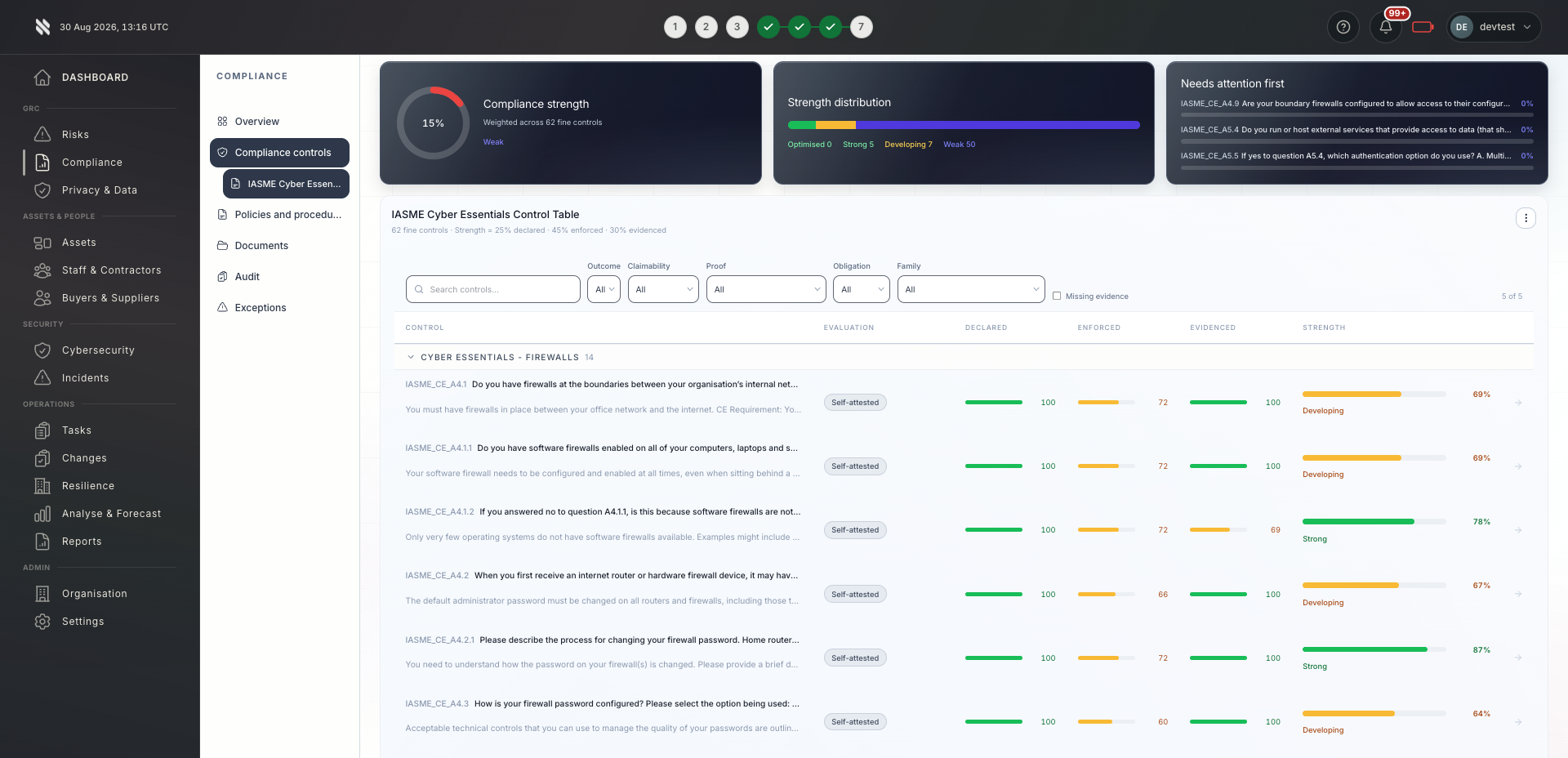
Fig Policy Management platform view
Core Capability

An organisation with no existing policies and disparate systems can build a full policy set in Fig and have operational compliance workflows in place within 24 hours.

Distribution Tracking

Policies pushed to staff automatically across email, portals, and mobile apps. Read receipts and attestation tracked by individual and role. Non-attesters are escalated automatically. Policy exception and waiver workflows with approval chains and automatic expiration.

Compliance Proof

Audit-ready evidence showing which staff read which policies, when, and whether they attested understanding. Policy effectiveness linked to incident and compliance trends.

Audit-ready workflow

How Policy Management becomes evidence

Policy Management should not be treated as a standalone tool surface. In Fig it is part of a governed workflow: a signal is captured, an owner is assigned, a control or risk is updated, and evidence is retained so the organisation can prove what happened later.

Lifecycle

Where it sits in the operating model

The Prove phase is where this capability sits in the wider Fig operating model. Policies age without review. Staff never see them. Attestation is manual and incomplete. Policy drift goes undetected. Compliance officers spend weeks on administrative work instead of governance. Fig turns that problem into a repeatable lifecycle so MSPs, risk teams, and auditors are not relying on static spreadsheets or ad hoc screenshots when a buyer asks for proof.

Evidence captured

What auditors and buyers see

For policy management, useful evidence normally includes the triggering record, the affected asset or supplier, the control requirement, the assigned owner, the decision made, the timestamp, and the outcome. That evidence is mapped back to frameworks such as Cyber Essentials, ISO 27001, NIS2, DORA, GDPR, CMMC, and internal policy requirements where relevant.

Implementation checks

Four steps to roll this out

  • 01Define who owns policy management and what events should trigger review.
  • 02Connect the relevant source systems so evidence is collected continuously.
  • 03Map outputs to the frameworks and policies that matter to the organisation.
  • 04Review exceptions, accepted risks, and overdue actions before audit or renewal.

Useful references

Independent sources buyers and auditors recognise

The exact evidence required still depends on your scope, risk profile, sector, and framework obligations.

Built for you

Who uses this?

MSPs & MSSPs

Standardised policy templates and distribution workflows for all clients. White-label policy management reduces your policy administration overhead while strengthening compliance delivery.

Learn more

Security & risk teams

Central policy governance with department-specific variants. Attestation tracking across thousands of staff integrated with onboarding and training systems.

Learn more

Compliance & audit

Policy read receipts, attestation records, and change history provide evidence of policy awareness and control over the policy lifecycle.

Learn more

Common questions

Frequently asked questions

Can we enforce different policies per department?

Yes. Policies can be targeted by department, role, or clearance level. Variant versions are managed as a single policy unit with centralised change control.

What happens if someone doesn't attest?

Fig tracks non-attestation and escalates automatically to line managers and compliance officers. Escalation timelines and notification templates are fully configurable.

Can we use our existing policies?

Yes. Import existing policies in any format. Fig adds version control, distribution tracking, and attestation workflows on top of your current documents. You do not need to rewrite anything.

How do we know which policies are out of date?

Fig tracks review dates for every policy and flags upcoming and overdue reviews on your dashboard. You set the review cycle per policy, whether that is quarterly, annually, or tied to regulatory changes. Overdue policies are escalated to the assigned owner automatically.

Can we roll out the same policy templates across all our MSP clients?

Yes. Create a master policy template once, then distribute it across client tenants. Each client can have localised variations where needed, but the core template stays centrally managed so updates propagate consistently.

Next step

See Policy Management in action.

Book a walkthrough tailored to your frameworks and tooling.