Audit Planning
Pre-audit planning with scope definition, sampling strategy, and testing approach documented. Auditor requirements gathered and tracked systematically.
Plan audits, organise evidence, track findings and prove remediation without creating a parallel spreadsheet process.

Auditors arrive with long request lists. Evidence scattered across multiple systems. You spend months assembling proof of compliance. Findings get lost. Remediation progress disappears after audit closes.
Pre-audit planning with scope definition, sampling strategy, and testing approach documented. Auditor requirements gathered and tracked systematically.
Organise dated evidence by control in an auditor workspace. Keep sample selections, test results and evidence provenance together so auditors can review the basis of each conclusion.
Findings logged with severity, evidence links, and ownership assignment. Remediation plans tracked with milestones. Status updates push to team leads and managers automatically.
Automated executive summaries, finding trends, and control effectiveness analysis. Comparative reports across multiple audits show compliance trajectory.
This compliance controls view shows the wider Fig environment. Ask us to demonstrate audit management against your own requirements.
A tailored walkthrough lets you review the relevant workflows, supported connections and reporting before deciding whether Fig is right for your team.
See it in a demo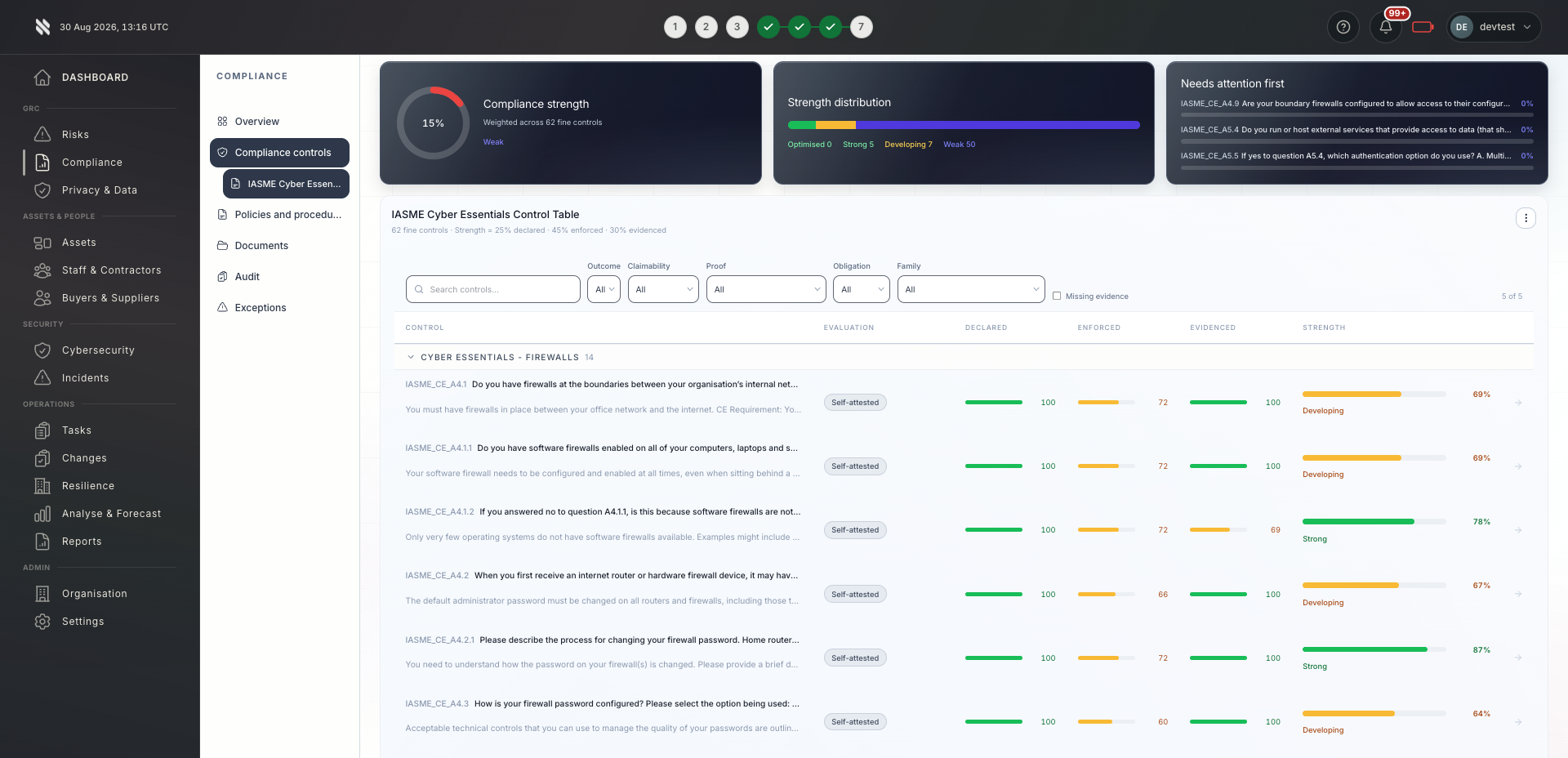

Bring delivery, oversight and assurance together without losing sight of who owns the next action.

Client audit coordination and evidence management. Audit readiness assessments for multiple clients run in parallel. White-label audit reporting improves client relationships.
Explore Fig for MSPs
Centralised audit coordination across internal and external auditors. Audit readiness tracked throughout the year, not prepared three months before assessment.
Explore Fig for organisationsStructured evidence, sampling records and test results can reduce retrieval work. Auditor time depends on scope, evidence quality and the auditor’s own procedures.
Discuss your requirementsStart with the outcomes you need. We will discuss scope, delivery and commercial terms with you before you commit.
Discuss your current approach to audit management, the teams involved and the requirements you need to meet.
See the relevant features in a tailored demonstration. Confirm integration coverage, responsibilities and any configuration needed.
Review the proposed scope and pricing. Set implementation priorities, ownership and review points around your organisation or client portfolio.
Platform functionality and automation depend on the agreed scope, configuration and connected systems. Software supports your compliance programme; it does not replace an independent assessment or guarantee certification.
Need to discuss a specific requirement or client scenario?
Speak to FigYes. You control auditor portal access and what evidence is visible. External auditors can log findings directly, reducing email back-and-forth and evidence transcription errors.
Findings remain linked to remediation actions in Fig Group. Quarterly status updates are pushed to team leads and managers. Remediation completion is tracked through to verification and closure.
Evidence can be organised by control with sample and test records available for review. This may reduce file requests, but the auditor sets sampling and assurance procedures. Time saved depends on scope, evidence quality and the auditor’s procedures.
Yes. Internal and external audits are managed through the same workflow. Internal audits can use the same evidence library and control mappings. Findings from internal audits feed into remediation tracking so issues are resolved before external auditors arrive.
You can upload ad-hoc evidence directly into the audit workspace and link it to the relevant control. Fig Group timestamps the upload and records who provided it. Over time, these manual uploads highlight gaps in your automated evidence collection.
Tell us what you would like to achieve. We will arrange a relevant conversation about the platform, your requirements and the right next step.
Continue exploring the prove capabilities, or return to the full platform overview.