Insurer-Grade Evidence
Organise controls, assessment results, audit trails, and remediation records into a clear, dated evidence view.
Organise posture, compliance, and risk data into customer-controlled exports for an insurer, broker, or underwriter.

Insurers, brokers, and underwriters may request detailed control evidence that is scattered across tools, screenshots, and documents. Rebuilding that record for each external review wastes time and creates inconsistencies.
Organise controls, assessment results, audit trails, and remediation records into a clear, dated evidence view.
Customers choose which records to export and whether to share them with an insurer, broker, or underwriter.
Use the same governed evidence across cyber, professional indemnity, D&O, and other external reviews where the recipient considers it relevant.
Keep evidence current as controls are tested and issues are remediated, instead of rebuilding a point-in-time pack for every request.
This compliance controls view shows the wider Fig environment. Ask us to demonstrate insurer-grade evidence against your own requirements.
A tailored walkthrough lets you review the relevant workflows, supported connections and reporting before deciding whether Fig is right for your team.
See it in a demo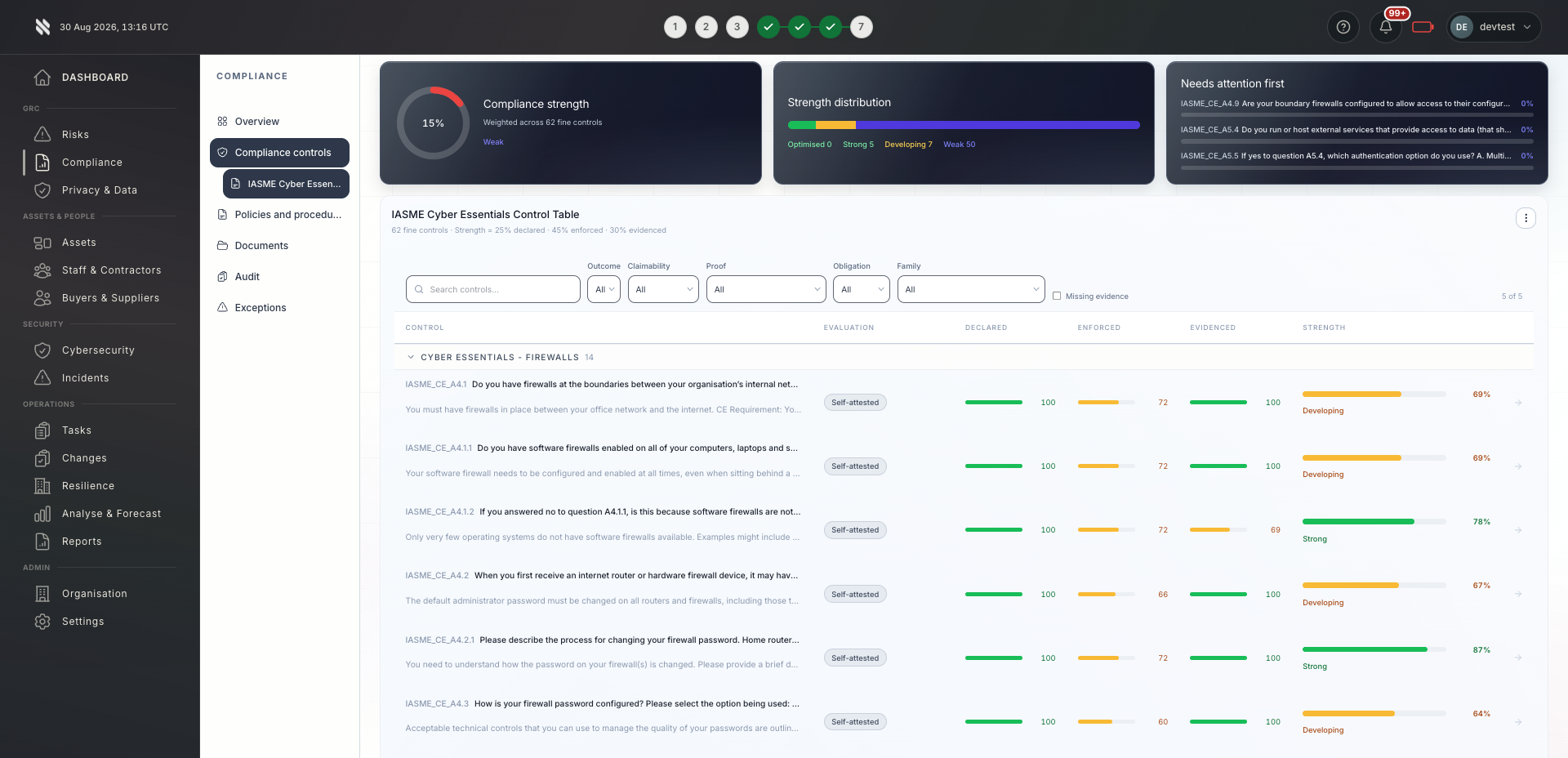

Bring delivery, oversight and assurance together without losing sight of who owns the next action.

Maintain a separate evidence record for every client. Each client controls whether its exported evidence is shared with an insurer, broker, or underwriter.
Explore Fig for MSPsKeep governance and security records current so your team can respond consistently to external information requests.
Explore Fig for organisations
Provide structured, traceable compliance evidence for customer-controlled external review. The recipient decides what evidence is required and how it is assessed.
Discuss your requirementsStart with the outcomes you need. We will discuss scope, delivery and commercial terms with you before you commit.
Discuss your current approach to insurer-grade evidence, the teams involved and the requirements you need to meet.
See the relevant features in a tailored demonstration. Confirm integration coverage, responsibilities and any configuration needed.
Review the proposed scope and pricing. Set implementation priorities, ownership and review points around your organisation or client portfolio.
Platform functionality and automation depend on the agreed scope, configuration and connected systems. Software supports your compliance programme; it does not replace an independent assessment or guarantee certification.
Need to discuss a specific requirement or client scenario?
Speak to FigIt means structured, dated, and traceable compliance evidence prepared for customer-controlled sharing. It does not mean Fig Group has approved it on behalf of an insurer or that an insurance outcome is guaranteed.
No. Fig Group does not advise on, recommend, arrange, distribute, place, bind, underwrite, or administer insurance. Customers decide whether to share Fig Group evidence with their chosen insurer, broker, or underwriter.
Tell us what you would like to achieve. We will arrange a relevant conversation about the platform, your requirements and the right next step.